
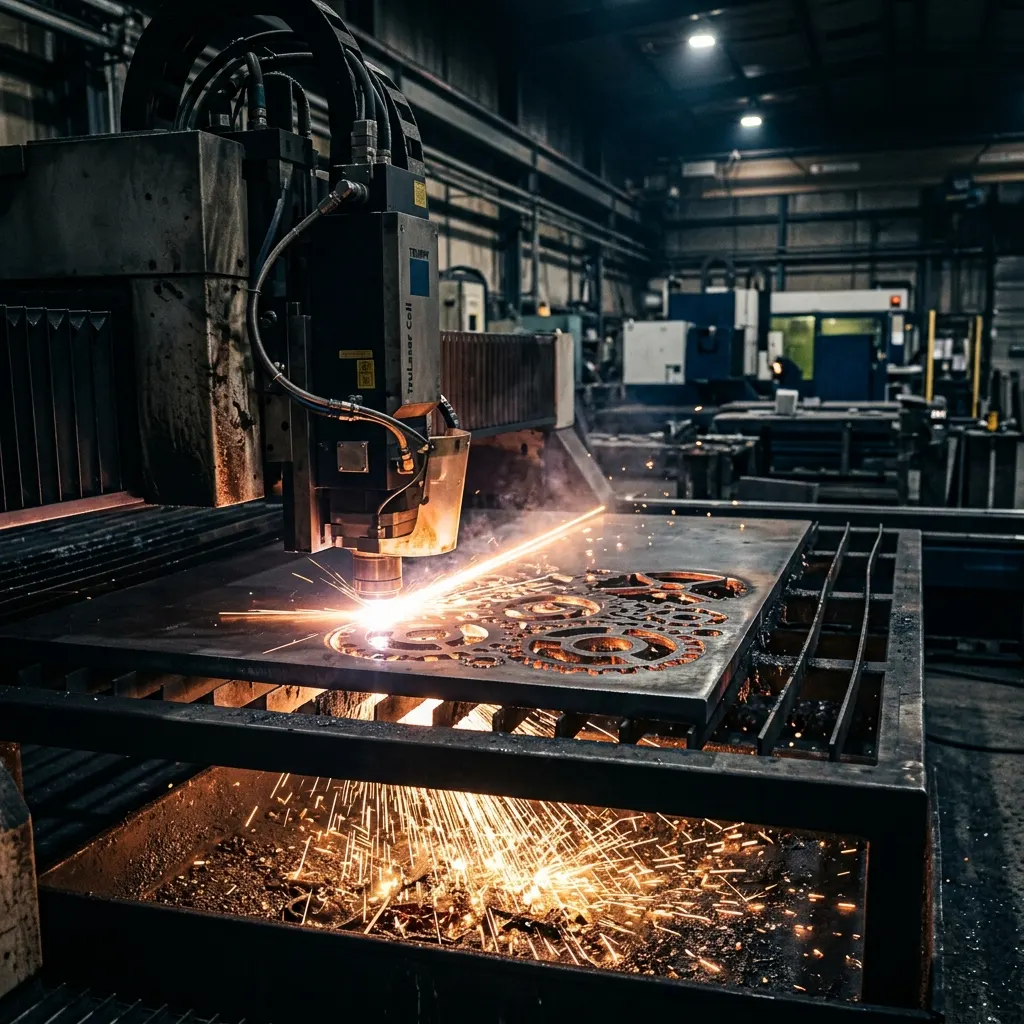
In the precision metal fabrication industry, fiber lasers have completely rewritten the rules of production speed and accuracy. However, as high-power lasers push past 10 kW to cut thicker sheets of stainless steel, mild steel, and aluminum, plant operators hit a major financial bottleneck: the escalating cost of assist gases.
Laser cutting requires a continuous, high-pressure stream of assist gas to flush molten metal out of the kerf. While oxygen is historically used for a flame-cutting reaction, it leaves a dark, oxidized layer on the metal edge that requires expensive secondary grinding before welding or painting.
To eliminate this step, modern shops use nitrogen for a clean, oxide-free edge. But relying on traditional gas delivery (high-pressure cylinders or liquid dewars) cuts deep into profit margins through delivery fees, gas evaporation losses, and cylinder rental fees.
The most effective solution to secure your supply chain and protect your bottom line is installing an on-site PSA nitrogen plant.
The Role of Nitrogen Purity in High-Precision Laser Cutting
When choosing a nitrogen generation system for laser cutting, matching the purity to your specific material thickness is critical. Even fractional amounts of residual oxygen can tint or discolor a cut edge:
- Stainless Steel (99.99% to 99.999% Purity): Demands absolute high-purity nitrogen to achieve a mirror-like, oxide-free finish that requires zero secondary processing.
- Mild Steel & Aluminum (95.0% to 99.9% Purity): Can be cut at lower purities depending on thickness, balancing rapid cutting speeds with lower gas consumption overhead.
How Pressure Swing Adsorption (PSA) Technology Works
An on-site PSA nitrogen plant generates high-purity nitrogen right on your shop floor using ambient air. The system functions as a continuous, automated separation process:
[Ambient Air] -> [Screw Compressor] -> [Filtration Stack] -> [CMS Bed (Adsorption)] -> [High-Purity N2 Output]
- Air Compression & Treatment: A heavy-duty rotary screw air compressor draws in atmospheric air and pushes it through a meticulous array of air dryers and sub-micron filters. Because air produced by a compressor is inherently hot, wet, and dirty, this step removes contaminants to safeguard the downstream system.
- Adsorption: The clean, dry air enters a pressure vessel filled with Carbon Molecular Sieve (CMS). Under pressure, the CMS selectively adsorbs oxygen, moisture, and trace gases while letting high-purity nitrogen molecules pass straight through to an accumulation tank.
- Regeneration: When the CMS bed in the first tower becomes saturated with oxygen, the system drops the pressure to vent the captured oxygen back into the atmosphere. The system then seamlessly cycles to a second identical tower to maintain a constant, uninterrupted flow of nitrogen gas.
The Financial Case: Bottled Gas vs. On-Site PSA Production
Many plant managers hesitate when reviewing a PSA nitrogen generator price, viewing it purely as an upfront equipment expense. However, an analysis of ongoing operational expenses reveals rapid payback periods:
| Metric | Cylinder Packs / Liquid Dewars | On-Site PSA Nitrogen Plant |
|---|---|---|
| Gas Cost Composition | Gas price + delivery fees + cylinder rentals + vaporization loss | Minimal electrical power required to run the companion compressor |
| Supply Reliability | Vulnerable to logistics delays, truck shortages, and vendor price hikes | Completely autonomous, available 24/7 on demand |
| Wasted Inventory | Up to 15% of liquid nitrogen boils off and vents away unused | Zero waste; gas is only produced as your laser lines pull pressure |
| Floor Safety | Shifting high-pressure 200-bar cylinders creates avoidable factory risks | Low-pressure static storage tank system with automated safeties |
Exploring the Core Advantages of the Trendi Nitrogen Suite
Distributed across India by the engineering veterans at Machinery Centre, the Trendi Modular Nitrogen Generator series utilizes PSA technology to match the demands of high-output fiber lasers:
- Uncompromising Purity Control: Features an integrated microprocessor controller that lets operators toggle purities smoothly from 95% up to 99.999%, adapting to varying metal profiles on the fly.
- Corrosion-Free Construction: Built with specialized premium anodized aluminum modules rather than traditional welded carbon steel, eliminating rust and scale buildup inside the generation columns.
- Low Noise & Energy Footprint: Designed alongside Trendi's low-noise, energy-efficient screw compressor lineup, ensuring your utility room draws less power while maintaining steady, high-pressure output.
System Integration: Engineering a Complete Laser Setup
A PSA system cannot operate in isolation. To supply a high-power fiber laser cutting head (15 to 30 bar demand), a complete system layout must be correctly sized:
[Trendi High-Efficiency Compressor] -> [Desiccant Dryer] -> [PSA Generator Modality] -> [High-Pressure Gas Booster] -> [N2 Storage Tank] -> [Fiber Laser Head]
Because a fiber laser requires high pressures to cleanly displace molten metal, a dedicated high-pressure gas booster sits directly behind the PSA generator modules. This booster compresses the generated gas into a high-pressure buffer tank, allowing the system to handle heavy production runs without dropping pressure.
Streamline Your Fabrication Shop with Machinery Centre
Deploying an integrated air and gas setup requires specialized technical expertise. Backed by nearly four decades of industrial experience, Machinery Centre designs turnkey air preparation and on-site nitrogen setups customized to your laser machinery's precise CFM and pressure parameters.
Stop letting fluctuating gas delivery invoices dictate your manufacturing margins. Request a tailored nitrogen system configuration and transition your facility to an autonomous, high-efficiency system.